• Africa
  • Americas
  • Asia
  • Europe
  • Middle East
Long View Monitor
No Result
View All Result
  • Africa
  • Americas
  • Asia
  • Europe
  • Middle East
No Result
View All Result
No Result
View All Result
Long View Monitor

U.S.–Venezuela Rapprochement What Trump’s Visit Could Mean for China’s Oil Strategy

April 5, 2026

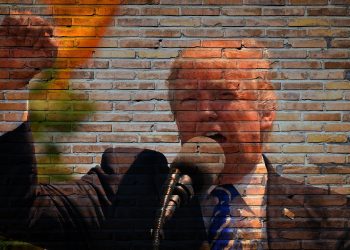
On 13 February, US President Donald Trump announced plans to visit Venezuela, stating that the date of the trip had not yet been determined. He reiterated his satisfaction with the country’s interim leadership.

The announcement followed a recent visit to Caracas by the US Energy Secretary and coincided with the administration’s decision to lift additional sanctions that had previously restricted investment in Venezuela’s oil sector. The move signals Washington’s intention to deepen engagement with Venezuela’s energy industry.

The planned visit by Donald Trump reflects a broader US strategy to consolidate influence over Venezuelan oil resources and strengthen its position in the Western Hemisphere. Previous US actions regarding Venezuela have been interpreted in China as an effort to curb Beijing’s influence, limit its access to strategic energy supplies, and reinforce US leverage in global oil markets.

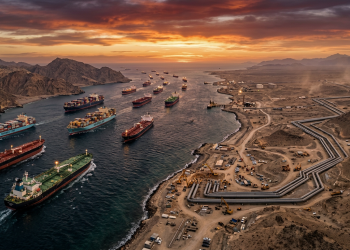
China, previously the largest buyer of Venezuelan crude, has faced increased uncertainty due to US control over Venezuelan oil flows and the broader geopolitical context, including sanctions on Russia and Iran. In response, Beijing has accelerated diversification efforts, notably expanding oil and gas cooperation with Canada and advancing its long-term energy transition agenda. Engagement with Ottawa has intensified, particularly after the completion of new export infrastructure linking Canadian crude to Pacific markets.

At the strategic level, Chinese analysts view US actions in Venezuela as part of a wider attempt to reinforce the dollar’s dominance in global energy trade and to consolidate geopolitical control over critical supply nodes in the Americas.

Our Forecast:

In the short term, US–Venezuela rapprochement is likely to reshape oil trade flows in the Western Hemisphere, potentially reducing China’s direct access to Venezuelan crude. However, given that Venezuelan imports account for a relatively limited share of China’s overall energy mix, the immediate macroeconomic impact on Beijing is expected to remain manageable.

China will likely continue diversifying its energy sources, strengthening cooperation with Canada and other suppliers, while simultaneously accelerating investment in non-fossil energy to reduce vulnerability to geopolitical shocks. Over the medium term, energy competition between the United States and China in the Western Hemisphere is expected to intensify, particularly in resource-rich states where political alignment and infrastructure control directly influence global supply dynamics.

Overall, Trump’s planned visit underscores a more assertive US energy diplomacy in the region, which may further deepen strategic rivalry with China in global energy governance and market influence.


ShareTweetPin
Editorial Team

Editorial Team

Related Posts

Unity and Fragmentation What the 14 February Rallies Reveal About Iran’s Opposition
Featured

Unity and Fragmentation What the 14 February Rallies Reveal About Iran’s Opposition

April 5, 2026

On 14 February, large-scale rallies organised by the Iranian diaspora were held worldwide at the initiative of exiled former crown prince Reza Pahlavi. Social media users highlighted the significant turnout, drawing comparisons with the official rallies in Iran marking...

Rahmon’s Lunar New Year Message Highlights Growing China-Tajik Partnership
Asia

Rahmon’s Lunar New Year Message Highlights Growing China-Tajik Partnership

February 17, 2026

After being absent from public view for over two weeks, Tajikistan’s President Emomali Rahmon reappeared in a short but highly visible public engagement by sending a video congratulation to Chinese President Xi Jinping on the occasion of the Lunar...

Indian Ocean Becomes Key Battleground in Sanctions Evasion Crackdown
Asia

Indian Ocean Becomes Key Battleground in Sanctions Evasion Crackdown

February 17, 2026

In mid-February, Indian authorities intercepted and seized three oil tankers – Stellar Ruby, Asphalt Star, and Al Jafzia – within India’s exclusive economic zone, approximately 100 nautical miles west of Mumbai. The operation, confirmed by a source with direct...

Cuba’s Future at Risk Oil Shortages and U.S. Sanctions Reshape Daily Life
Americas

Cuba’s Future at Risk Oil Shortages and U.S. Sanctions Reshape Daily Life

February 17, 2026

Cuba is experiencing a severe fuel crisis exacerbated by US-imposed restrictions on oil supplies. On 13 February, AFP reported that taxi drivers in Havana are increasingly replacing cars with e-tricycles due to the high cost and scarcity of gasoline....

  • About
  • Contact
  • Terms & Conditions

© Long View Monitor 2026. All rights reserved

Powered by
►
Necessary cookies enable essential site features like secure log-ins and consent preference adjustments. They do not store personal data.
None
►
Functional cookies support features like content sharing on social media, collecting feedback, and enabling third-party tools.
None
►
Analytical cookies track visitor interactions, providing insights on metrics like visitor count, bounce rate, and traffic sources.
None
►
Advertisement cookies deliver personalized ads based on your previous visits and analyze the effectiveness of ad campaigns.
None
►
Unclassified cookies are cookies that we are in the process of classifying, together with the providers of individual cookies.
None
Powered by
No Result
View All Result
  • Africa
  • Americas
  • Asia
  • Europe
  • Middle East

© Long View Monitor 2026. All rights reserved