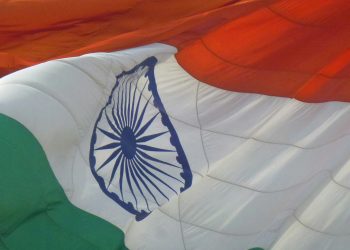
India will host the BRICS summit in Delhi on 12–13 September, seeking a unified declaration and concrete agreements on digital payments and supply chains despite divisions within the expanded bloc over the conflicts in the Middle East and Ukraine, de-dollarisation and China’s influence.
The BRICS group now includes Brazil, Russia, India, China and South Africa, as well as Egypt, Ethiopia, Saudi Arabia, Iran, the UAE and Indonesia and 10 partner countries. Together, they represent 49% of the world’s population, 40% of global GDP and 26% of international trade. India’s official theme for the summit is “Different strengths. One shared purpose.”
For Delhi, one of the main challenges will be securing consensus on the Middle East conflict. Rival powers Iran and the UAE are both members of BRICS, while a meeting of the bloc’s foreign ministers in May failed to produce a joint statement because of differences over the war.
The Ukraine conflict is also expected to feature in discussions. Prime Minister Narendra Modi is due to hold bilateral talks with Russian President Vladimir Putin on 11 September, ahead of the summit. Russia has welcomed India’s peace efforts.
India must also balance its BRICS role with relations with the United States amid tariff tensions and growing calls from some members, including Brazil and Russia, for a common currency. Delhi has opposed the creation of a common BRICS currency and has instead backed cross-border digital payments and the use of central bank digital currencies.
India plans to launch a pilot system linking its digital rupee with China’s digital yuan and Russia’s digital rouble through a common cross-border payment system. The initiative is part of Delhi’s effort to strengthen economic cooperation without turning BRICS into an anti-Western alliance.
China presents another challenge. Its economic weight in BRICS gives Beijing significant influence through trade, investment, manufacturing and critical minerals. At the same time, India and China remain strategic competitors. A possible meeting between Modi and Chinese President Xi Jinping at the summit could affect the balance within the group.
India hopes the bloc’s 2024 expansion will give it greater economic and diplomatic weight while making it possible for Delhi to advance its own priorities. These include cooperation on payments, supply chains and strengthening the voice of the Global South.
The summit’s outcome will depend largely on whether India can turn the expanded bloc’s economic weight into concrete results. A unanimous declaration and progress on payments and supply chains would strengthen India’s position as a leading voice for the Global South. Failure to overcome divisions over the Middle East, currency and trade could instead expose the limits of consensus within an increasingly diverse BRICS.