Pakistan has imposed emergency and governor’s rule in north-western Khyber Pakhtunkhwa, removing the opposition Pakistan Tehreek-e-Insaf (PTI)-led provincial government and placing the militancy-hit province under direct federal control. President Asif Ali Zardari approved the move on 11 October, as tensions between Islamabad and PTI continued to escalate over security, governance and protests demanding the release of jailed party founder Imran Khan.
The decision followed an emergency federal cabinet meeting chaired by Prime Minister Shehbaz Sharif, which reviewed the deteriorating security situation in the province bordering Afghanistan. The government said rising militant violence and the provincial administration’s alleged failure to maintain law and order justified the intervention.
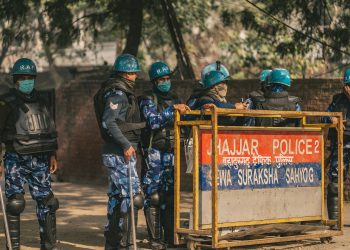
Under the new arrangement, Governor Faisal Karim Kundi will administer Khyber Pakhtunkhwa with the assistance of an 11-member Advisory Council. Law Minister Azam Nazeer Tarar said the arrangement would initially last six months, subject to constitutional requirements and parliamentary approval. Army troops were also deployed to assist the civil administration, while key roads linking the province to Islamabad were blocked.
The move has major political implications because Khyber Pakhtunkhwa was PTI’s last major governing stronghold. It came as the party was mobilising supporters for a march towards Islamabad, launched on 4 October after talks with the federal government failed to produce an agreement on the release of Imran Khan.
Islamabad has said terrorism, rather than the protest itself, was the main reason for the intervention. Interior Minister Mohsin Naqvi said the government had no issue with a PTI sit-in but accused the provincial administration of failing to cooperate sufficiently on counterterrorism efforts. PTI rejected the allegations, while party leaders accused the federal government of using security concerns as a pretext to remove an elected provincial administration.
The decision has drawn mixed reactions in Pakistan’s media. Some newspapers described the intervention as necessary after months of confrontation, while others warned that imposing governor’s rule could damage democratic institutions and prove counterproductive. The central question, according to the debate, is whether direct federal control can restore peace and stability in a province where the elected government was accused of failing to do so.
PTI has said it will challenge the emergency and governor’s rule in court and through other democratic institutions. Its ability to pressure Islamabad on the streets, however, appears weakened by the loss of its provincial government. The party’s planned long march reportedly lost momentum in Swabi on 11 October, while security measures intensified.
The coming months are therefore likely to shift the confrontation from the streets towards the courts and political institutions. The six-month period of federal control will also test whether Islamabad can deliver greater security and stability in Khyber Pakhtunkhwa, which the government has cited as the main justification for its intervention.