• Africa
  • Americas
  • Asia
  • Europe
  • Middle East
Long View Monitor
No Result
View All Result
  • Africa
  • Americas
  • Asia
  • Europe
  • Middle East
No Result
View All Result
No Result
View All Result
Long View Monitor

New Taliban Legislation Expands Authority Over Property Owned by Afghans Abroad

June 7, 2026

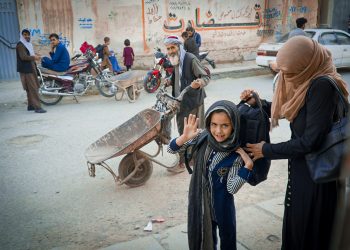
The Taliban have enacted a new law establishing a formal system to identify, manage and, in some cases, transfer property belonging to absent or missing individuals in Afghanistan. Announced on 1 June and approved by Taliban supreme leader Mawlawi Hibatullah Akhundzada, the legislation creates a new directorate under the Taliban-controlled Supreme Court and grants authorities broad powers over assets owned by people who are unable to manage their property. The move could affect millions of Afghans living abroad and has sparked debate over property rights and state control.

The 31-article law applies to two main groups: “absent persons,” who cannot access or administer their assets, and “missing persons,” whose whereabouts are unknown. It covers land, homes, businesses, vehicles and other movable and immovable property.

Under the legislation, the newly created Directorate for the Review of Movable and Immovable Properties of Absent Persons can register, verify, protect, lease and administer such assets. Authorities may also collect income generated by properties and hold it in designated accounts. In cases where no lawful heirs or claimants can be identified, property may eventually be transferred to the state treasury.

The law also introduces special provisions for individuals accused of opposing Taliban rule or supporting anti-Taliban activities. Those classified as sa’een bil-fasad – a category defined in the legislation as people promoting discord or supporting “corrupt” elements – face additional restrictions. Any return of their property or related benefits requires the personal approval of Akhundzada, a provision that has drawn significant criticism.

Taliban authorities argue that the measure is intended to address longstanding problems including land disputes, illegal occupation and ownership conflicts. They say it complements broader efforts launched since 2022 to recover allegedly seized land and restore property rights. The law also allows absent owners, heirs and legal representatives to seek the return of assets through judicial procedures and requires the restoration of residential properties that were unlawfully occupied.

Critics, however, warn that the legislation could increase pressure on political opponents and members of the Afghan diaspora. Concerns focus on the broad definition of sa’een bil-fasad, the role of military judicial authorities in overseeing assets, and the practical difficulties many Afghans abroad may face when proving ownership or challenging official decisions.

The law arrives amid ongoing disputes over land and property under Taliban rule. Its long-term impact will depend on how it is enforced. Supporters see it as a mechanism for resolving ownership disputes, while critics fear it could expand state control over private assets, particularly those belonging to political opponents and Afghans living outside the country.


ShareTweetPin
Editor

Editor

Related Posts

Turkey Sees Opportunity as NATO Faces Uncertainty Ahead of July Summit
Europe

Turkey Sees Opportunity as NATO Faces Uncertainty Ahead of July Summit

June 24, 2026

NATO's upcoming leaders' summit on 7-8 July is gaining significance amid renewed questions about US commitment to the alliance. While concerns have grown across Europe following remarks from Donald Trump and other US officials, Turkish leaders are presenting the...

China Unveils Global Governance Blueprint Amid Indirect Criticism of the US
Americas

China Unveils Global Governance Blueprint Amid Indirect Criticism of the US

June 24, 2026

China has released a new white paper on global governance, expanding President Xi Jinping’s Global Governance Initiative (GGI) and presenting Beijing as a defender of developing nations and the UN-based international order. The document also contains indirect criticism of...

Growing Tensions in Badakhshan Expose Divisions Within Taliban Leadership
Asia

Growing Tensions in Badakhshan Expose Divisions Within Taliban Leadership

June 24, 2026

Reports of rising tensions between the Taliban leadership and prominent Tajik commander Juma Khan Fateh in Afghanistan’s Badakhshan province have intensified speculation about internal divisions within the movement. Media reports claim Taliban forces were deployed to parts of the...

Pezeshkian Signals New Regional Strategy After Iran-US MoU
Middle East

Pezeshkian Signals New Regional Strategy After Iran-US MoU

June 24, 2026

Iranian President Massoud Pezeshkian used his visit to Islamabad to reaffirm that Tehran will not negotiate over its ballistic missile programme while signalling a broader push to strengthen regional partnerships after the recent Iran-US memorandum of understanding (MoU). The...

  • About
  • Contact
  • Terms & Conditions

© Long View Monitor 2026. All rights reserved

Powered by
►
Necessary cookies enable essential site features like secure log-ins and consent preference adjustments. They do not store personal data.
None
►
Functional cookies support features like content sharing on social media, collecting feedback, and enabling third-party tools.
None
►
Analytical cookies track visitor interactions, providing insights on metrics like visitor count, bounce rate, and traffic sources.
None
►
Advertisement cookies deliver personalized ads based on your previous visits and analyze the effectiveness of ad campaigns.
None
►
Unclassified cookies are cookies that we are in the process of classifying, together with the providers of individual cookies.
None
Powered by
No Result
View All Result
  • Africa
  • Americas
  • Asia
  • Europe
  • Middle East

© Long View Monitor 2026. All rights reserved