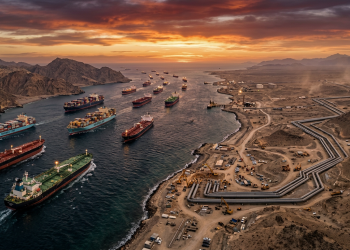
The Gulf Cooperation Council (GCC) and the United States have reaffirmed their support for free and unrestricted navigation through the Strait of Hormuz, rejecting any attempts to impose fees or assert control over the strategic waterway. The position was outlined in a joint statement issued after the GCC-US ministerial meeting in Bahrain, which also linked future trade with Iran to its compliance with a new memorandum of understanding and broader regional commitments.
The ministers welcomed the memorandum of understanding between Washington and Tehran and praised the mediation efforts of Pakistan and Qatar. They reiterated their shared goal of preventing Iran from acquiring a nuclear weapon and said regional stability requires addressing Iran’s ballistic missile and drone programmes, as well as its support for proxy groups. The statement added that trade and investment with Iran would remain conditional and could be reversed if Tehran fails to comply with the agreement or continues destabilising activities.
The meeting also welcomed an evacuation plan launched by Oman and the International Maritime Organisation to assist more than 11,000 sailors stranded in the region.
Beyond Iran, the ministers expressed support for Syria’s sovereignty and pledged continued assistance to its government. They backed ongoing US-mediated talks between Israel and Lebanon, reaffirmed support for the reconstruction of Gaza alongside the disarmament of armed groups, and said no one should be forced to leave the territory. They also condemned attacks by Iran-backed militias in Iraq against GCC states and called on Baghdad to fulfil its international commitments while supporting efforts to disarm militias.
The joint statement follows heightened regional tensions and reflects continued coordination between the GCC and Washington on security, diplomacy and maritime stability.
The ministers signalled that future engagement with Iran will depend on its adherence to the memorandum of understanding and its regional conduct, while cooperation on maritime security and broader Middle East stability is expected to remain a priority.