The Taliban have introduced a new Police Law that expands police powers across Afghanistan, bans all public demonstrations and increases the maximum detention period for suspects from three to 10 days. The law also allows security officials to “discipline” accused people, including by threatening them with death, and gives police a role in enforcing restrictions on images of humans and animals.
The 53-article law was published by the Taliban-run Ministry of Justice on 22 August after being approved by Taliban leader Hibatullah Akhundzada. It replaces the Police Law adopted under Afghanistan’s previous government in 2005 and has taken effect through publication in the Official Gazette.
One of the most significant changes is the complete ban on demonstrations. Article 50 states that any type of demonstration in Afghanistan is forbidden. The measure covers both political protests and civil demonstrations, including those supporting women’s rights. The Taliban had already banned political activities in April 2024 and had suppressed anti-government demonstrations since returning to power.
The new law also expands the police’s role in enforcing the Taliban’s morality rules. Police must cooperate with the Ministry for the Promotion of Virtue and Prevention of Vice to enforce the ban on images of living beings. The restriction, introduced in the Taliban’s August 2024 morality law, has already been applied in 25 of Afghanistan’s 34 provinces and has affected local television stations. Under the new Police Law, officers are required to act against such images displayed in public places, including on billboards and advertisements.
The legislation gives police greater powers over suspects and accused people. Officers can detain suspects for up to 10 days while investigating a crime, compared with a maximum of three days under the 2005 law. Article 41 also allows officials to “discipline” people accused of major crimes by threatening them with death, using angry words, urging them to fear God and compelling them to repent. Prisoners, however, cannot be punished without a court ruling, and recording punishments such as executions and floggings is prohibited.
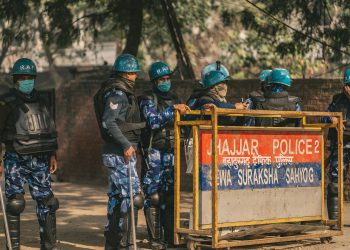
The law also sets rules for the use of force. Police may use equipment including water cannons, tasers, riot shields, weapons and explosives. Firearms can be used in cases of rebellion, armed crimes against security and armed conflict. Unlike the 2005 law, the new legislation does not include comparable safeguards, such as requirements for warning shots or an explicit prohibition on using force against children.
The Police Law further defines police responsibilities in areas including child discipline, protection of historical artefacts and environmental offences. Children under seven are not held responsible for crimes, while those between seven and puberty are to be handed to parents or guardians for “reform”, or placed in a juvenile correction facility if their guardians cannot be identified.
Amnesty International condemned the law as “another sweeping assault on human rights in Afghanistan”, citing concerns over due process, fair-trial rights, freedom of expression, privacy, child rights and expanded policing powers. Local public criticism has been limited because the Taliban authorities have declared criticism of their domestic laws illegal.
The new legislation is likely to further strengthen the Taliban’s control over public activity and expand the role of police beyond conventional law enforcement. Its provisions on demonstrations, detention, religious enforcement and the use of force point to broader restrictions on individual freedoms and greater police powers over citizens.