Chinese President Xi Jinping will attend the Shanghai Cooperation Organisation (SCO) summit in Bishkek on August 31 and September 1, with the meeting expected to focus on deeper cooperation within the bloc, major international issues and China’s vision for reforming global governance.
The summit marks 25 years since China, Russia and four Central Asian states — Kazakhstan, Kyrgyzstan, Tajikistan and Uzbekistan — established the SCO in 2001. The organisation has since expanded to 10 member states, 15 dialogue partners and two observer states across Eurasia, South Asia and the Middle East.
Xi is attending the summit for the 14th time, either in person or virtually, making him one of the bloc’s most experienced leaders alongside Tajik President Emomali Rahmon and Russian President Vladimir Putin.
Beijing has not disclosed Xi’s specific proposals, but China’s Foreign Ministry said he would exchange views with other leaders on deepening SCO cooperation and major international and regional issues. The discussions are also expected to support what Beijing calls the SCO’s “high-quality development” and greater participation in reforming the global governance system.
In an article published in Kyrgyz media before his visit, Xi described the SCO as a model of regional cooperation based on partnership rather than alliance. He called for renewed efforts to promote the “Shanghai Spirit” and build an SCO community with a shared future.
One of the closely watched meetings will be between Xi and Iranian President Massoud Pezeshkian, if it takes place. It would be their first contact in nearly a year. Xi has not spoken with Pezeshkian since the US war with Iran began in late February, although Beijing has continued to support Tehran.
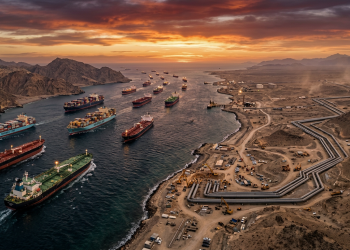
Chinese Foreign Minister Wang Yi has met or spoken with Iranian Foreign Minister Abbas Araqchi six times since the start of the war, repeatedly expressing China’s support for Iran’s sovereignty, security and national dignity. Chinese diplomats have also avoided blaming Tehran for disruptions to shipping through the Strait of Hormuz.
Xi is also expected to meet Putin. The two leaders have met more than 40 times since 2013, including repeatedly at SCO and Brics summits. They could discuss recent developments involving Russia, including CIA Director John Ratcliffe’s reported visit to Moscow.
A meeting with Indian Prime Minister Narendra Modi or other SCO leaders and partners is also possible, although Beijing has not announced such arrangements. Xi generally holds fewer bilateral meetings at major international gatherings, focusing on leaders considered most important.
Chinese state media have highlighted the SCO’s growing economic importance. China’s trade with SCO countries reached $523.5 billion in 2025, up from $512.4 billion in 2024, accounting for 8% of China’s total foreign trade. Xinhua also pointed to growing exports of electric vehicles, lithium batteries and solar cells, as well as cross-border e-commerce.
Chinese media have also presented the SCO as a potential force for stability and cooperation in a more turbulent international environment. People’s Daily said the bloc could build consensus and take a greater role in promoting peace, development and cooperation.
Although Chinese media have not directly identified the Iran conflict as a central summit issue, state outlets have repeatedly promoted Xi’s Global Governance Initiative. Xinhua said the international community was looking to the SCO to contribute to global governance, including on issues such as AI governance and regional security.
The summit is likely to reinforce China’s push for a stronger SCO role in regional cooperation and global governance. The most closely watched outcomes will be Xi’s bilateral meetings, particularly with Pezeshkian and Putin, and whether discussions on major international conflicts translate into stronger coordination among SCO members.