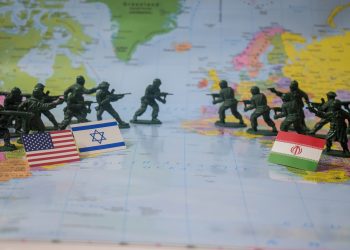
Ebrahim Azizi, head of Iran’s parliamentary National Security and Foreign Policy Committee, said on 12 October that “counter-revolutionary” groups had launched a “hybrid war” against Iran with backing from some regional countries, as Tehran stepped up security measures in the south-eastern province of Sistan-Baluchestan following the assassination of a senior police official.
Azizi said intelligence assessments showed a shift in militant tactics supported by certain regional states. During a visit to the province, he called border fortification a priority and urged the government to speed up funding. Sistan-Baluchestan shares about 1,300km of border with Afghanistan and Pakistan, where, he said, authorities have limited control over parts of their border regions.
The security focus intensified after the assassination of Nosrat Eftekhari, the province’s deputy police chief for social affairs, in a roadside bomb attack. President Massoud Pezeshkian condemned the killing as a “blind terrorist act” on 10 October and ordered authorities to identify those responsible. The Interior Ministry sent a delegation to investigate the attack.
Iranian authorities have also alleged foreign support for militant groups operating in and around the province. Nour News, affiliated with the Supreme National Security Council, said on 12 October that “some Arab countries” and a “Persian Gulf state” had funded and armed the Pakistani groups Sipah-i-Sahaba and Jaish-e-Mohammad. The outlet claimed the groups had recruited 50,000 armed members and deployed 1,500 operatives into Iran.
Nour News said the attacks were part of a wider strategy involving military pressure, sanctions, naval and air blockades, and psychological warfare. It also argued that Iran’s response should address the province’s social and economic problems alongside security measures. A February 2026 report by Fararu described Sistan-Baluchestan as Iran’s third lowest-income province.
The assassination has also increased pressure on moderate Sunni clerics. Fars News Agency, which is close to the Islamic Revolutionary Guard Corps, criticised Sunni cleric Mowlana Abdolhamid Esmailzehi for allegedly failing to condemn the attack. Mehr News Agency subsequently published his message expressing regret over Eftekhari’s death. A day before the assassination, Abdolhamid had criticised the execution and imprisonment of political dissidents in Iran.
Meanwhile, the authorities continue their crackdown on militant groups. On 12 October, the judiciary’s Mizan News Agency reported the execution of Omar Derastaran, whom it described as a key operational member of Jaish al-Zolm, the name Iranian authorities use for the former Jaish al-Adl. The group rebranded as the Popular Resistance Front in 2025 after merging with several other groups. Mizan said Derastaran had taken part in attacks on IRGC and police facilities, including a 2024 attack in Rask that killed 11 police officers. Iranian security forces also arrested three people on 11 October accused of cooperating with the Popular Resistance Front.
The latest measures suggest that Tehran is likely to maintain a combination of tighter border controls, security operations and pressure on suspected militant networks in Sistan-Baluchestan. At the same time, Iranian officials and state-linked media have highlighted the province’s economic and social vulnerabilities as factors that could continue to affect its security.